
The Effect of Temperature on
the Release and Retention
of Oak Extractives During
Wine Maturation
Alexandra Le Floch, Ph.D.
Research & Development, Tonnellerie du Monde
L. Federico Casassa, Ph.D.
Professor of Enology, Cal Poly
David Llodrá, Ph.D.†
Research & Development Director,
Independent Stave Company/Oak Solutions Group
DEDICATION
This research is dedicated to David Llodrá, who was partially inspired to pursue this experiment by his native homeland of Spain, where non-jacketed winemaking tanks may be used outside in fluctuating daytime and nighttime temperatures. Dr. Llodrá wanted to better explore the effect of temperature in identifing key trends that may be applied to winemaking at controlled temperatures and during temperature fluctuation. Sadly, Dr. Llodrá passed away before the paper could be fully published, but he trusted the team to finish his extensive work to completion and publish posthumously.
ABSTRACT
The extraction and retention of oak-derived volatiles and phenolics during wine maturation is influenced by multiple factors, including oak dosage, surface area, toasting level, contact time and cellar conditions. While dosage and duration of contact time are well studied, the role of temperature on the extraction of oak-derived compounds from oak alternatives remains less explored. This work investigated the effect of storage temperature (40°F/4.4°C, 70°F/21.1°C, and 90°F/32.2°C) and dosage (2 g/L and 6 g/L) on the extraction of volatile and non-volatile compounds from French and American oak chips during 31 days of contact with a 2021 California Merlot. Samples collected at 16 and 31 days were analyzed by spectrophotometry for phenolics and by GC–MS for 28 targeted volatile markers. Chemical analyses at 16 and 31 days allowed assessment of extraction kinetics and the relative importance of temperature compared to dosage and time. The experimental results showed that oak chip dosage was the primary driver of compound extraction, while temperature, though often underestimated, showed a secondary, compound-dependent influence. Extending contact time beyond ~16 days produced comparatively limited gains for most compounds.
INTRODUCTION
In modern winemaking, oak chips are widely used at different stages of wine production to enhance complexity and structure—and remain a key tool alongside new approaches aimed at improving the extraction of wood-derived compounds[1]. The dosage rate and duration of contact are typically adjusted according to the desired sensory profile of the final wine. Numerous studies have shown that the extraction of volatile compounds from oak chips occurs rapidly, with peak concentrations often reached within just one month [2]. A key factor responsible for this rapid extraction is the available surface area provided by oak alternative products, including oak chips. The smaller the particle, the larger the surface area of oak to wine volume, the faster the extraction will typically be [3]..
While the oak alternative format (surface area), dosage and contact time are commonly considered the primary variables in oak extraction, temperature is another critical parameter that can significantly influence both the rate and extent of compound release. As coopers, Oak Solutions Group is well positioned to provide guidance on oak format, dosage and contact time, but we have no control over the temperature conditions in the cellars where oak products are used. Gaining insight into the role of temperature is therefore essential to improve our recommendations and ensure consistent performance of oak products across diverse winemaking environments.
OBJECTIVE
This experiment was designed to evaluate the impact of temperature during oak chip treatment on the diversity and concentration of oak-derived extractives in wine. It also assessed how different oak chip dosage rates influence the concentration of these extractives.
MATERIALS & METHODS
This experiment was conducted at California Polytechnic State University Research Winery in San Luis Obispo, California.
Experimental Design
The Wine
A 2021 California Merlot served as the base wine for the experiment. Oak was introduced via oak chips, with each treatment conducted in an individual 28.7-gallon stainless steel tank. The base wine had previously received an oak addition during fermentation; thus, the control already contained oak-derived extractives and served as the baseline reference against which all other treatments were compared.
The Oak
For this experiment, two ēvOAK oak chip products were sourced from
Oak Solutions Group. Oak chips integrate easily into stainless-steel tanks, and the two selected products were chosen to represent both French and American oak:
• High Mocha oak chips – crafted with French oak
• Pure 2 Vanilla oak chips – crafted with American oak
Both products were applied as a “large chip” format, with individual pieces measuring approximately .50-in × .50-in × .25-in (12.7-mm × 12.7-mm × 6.35-mm) in size.
Tank Temperature & Dosage
To investigate how oak extractives are influenced by temperature during oak maturation, three different temperatures were applied during the oak contact period. Temperature was controlled through glycol-cooled jackets fitted around each stainless-steel tank, providing precise and stable regulation at each of the three setpoints. Two dosage rates were also used at each temperature to further assess whether the temperature-related trends remain consistent across different
dosage levels.
2 g/L and 6 g/L
40°F, 70°F and 90°F
(4.4°C, 21.1°C and 32.2°C)
Temperature loggers were installed on each tank to continuously monitor temperature throughout the experiment. Three temperatures spanning a wide range were intentionally selected to better identify trends that can later be applied within the temperature range considered safe and practical for winemaking.
Contact Time
All treatments were applied for 31 days and then the oak chips were removed from the tanks.
All soak treatments for each variable were conducted simultaneously, ensuring consistent conditions across all tanks during the experiment. This approach allowed for direct comparison between each treatment group under matched timelines and environmental controls.
List of Variables
The full list of treatments was as follows:
Control (no oak added)
40°F (4.4°C) storage temperature of High Mocha chips at 2 g/L
70°F (21.1°C) storage temperature of High Mocha chips at 2 g/L
90°F (32.2°C) storage temperature of High Mocha chips at 2 g/L
40°F (4.4°C) storage temperature of High Mocha chips at 6 g/L
70°F (21.1°C) storage temperature of High Mocha chips at 6 g/L
90°F (32.2°C) storage temperature of High Mocha chips at 6 g/L
40°F (4.4°C) storage temperature of Pure 2 Vanilla Chips at 2 g/L
70°F (21.1°C) storage temperature of Pure 2 Vanilla Chips at 2 g/L
90°F (32.2°C) storage temperature of Pure 2 Vanilla Chips at 2 g/L
40°F (4.4°C) storage temperature of Pure 2 Vanilla Chips at 6 g/L
70°F (21.1°C) storage temperature of Pure 2 Vanilla Chips at 6 g/L
90°F (32.2°C) storage temperature of Pure 2 Vanilla Chips at 6 g/LL
Sampling
Samples were collected for chemical analysis at 16 and 31 days and subsequently bottled. The Wine Chemistry Lab at California Polytechnic State University performed the wine phenolic analysis, while additional samples were submitted to the Independent Stave Company (ISCO) Laboratory for Gas Chromatography–Mass Spectrometry (GC–MS) analysis of oak volatiles and ellagitannins. Remaining sample volume was stored under refrigeration for potential future analyses.
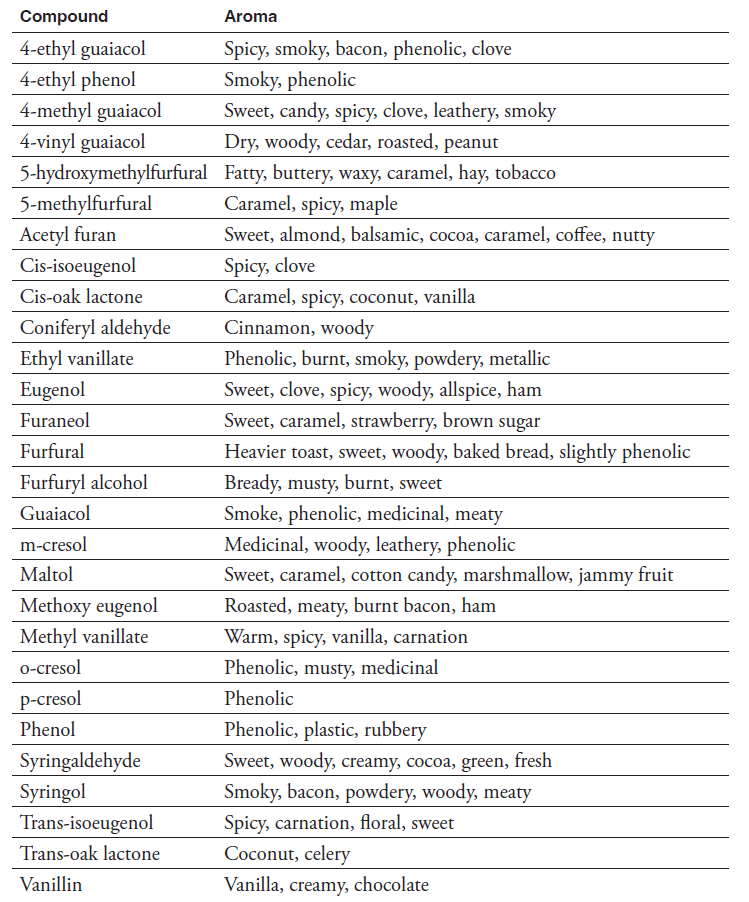
Table 1. 28 oak-derived volatile compounds analyzed.
RESULTS
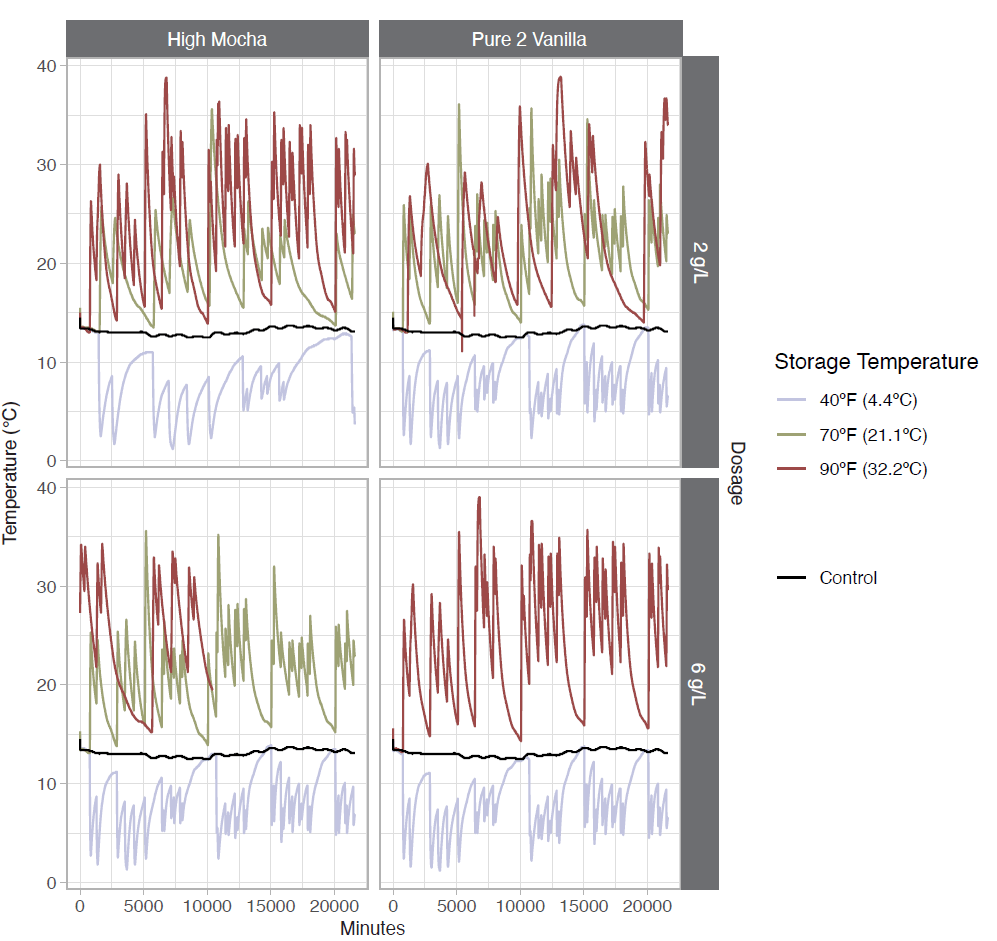
Figure 1. Temperature profiles by product, dosage and storage temperature.
As shown in Figure 1, the three target temperatures: 40°F, 70°F and 90°F (4.4 °C, 21.1 °C and 32.2 °C) produced clear and well-separated temperature profiles. The glycol-cooled jackets provided stable regulation, and the loggers confirmed that each tank consistently maintained its assigned setpoint. These large, controlled temperature differentials ensure that any differences in oak extractives can be confidently attributed to the applied temperature treatments across both dosage rates (2 g/L and 6 g/L).
Basic Chemistry
No major differences were observed in the basic chemistry of wines across treatments (Figure 2). Titratable acidity and pH showed slight declines, and acetaldehyde was largely consumed in the 90°F treatments. Free SO2 decreased substantially at both 70°F and 90°F, consistent with increased temperature accelerating SO₂ consumption. Overall, the fundamental wine chemistry remained relatively stable despite the wide temperature differentials and dosage variations.
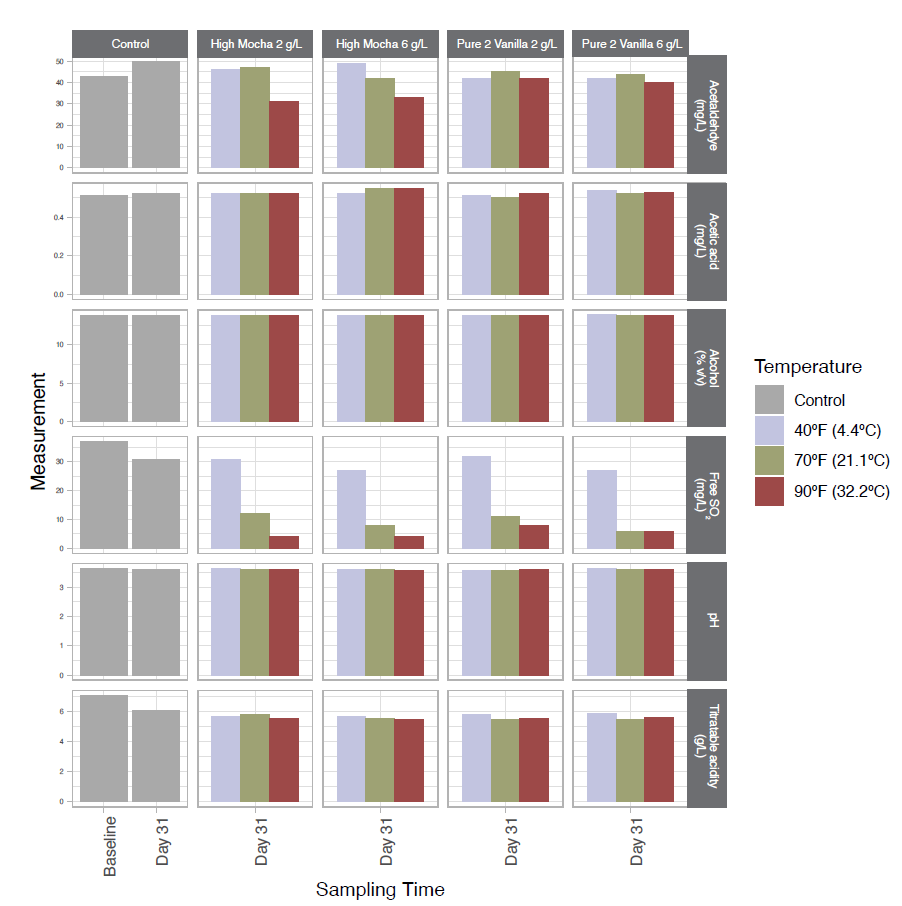
Figure 2. Changes in major oenological parameters between the baseline and 31 days of contact time.
Phenolic Chemistry
Similar to the basic chemistry of the wines, the phenolic composition remained largely stable across all treatments (Figure 3). Anthocyanins showed a modest decline in the 90°F samples, while tannins exhibited a slight, general decrease across treatments. No notable effects were observed on polymeric pigment formation (TPP) or on total phenolics, indicating that temperature and dosage had minimal influence on the overall phenolic structure of the wine during the experiment.
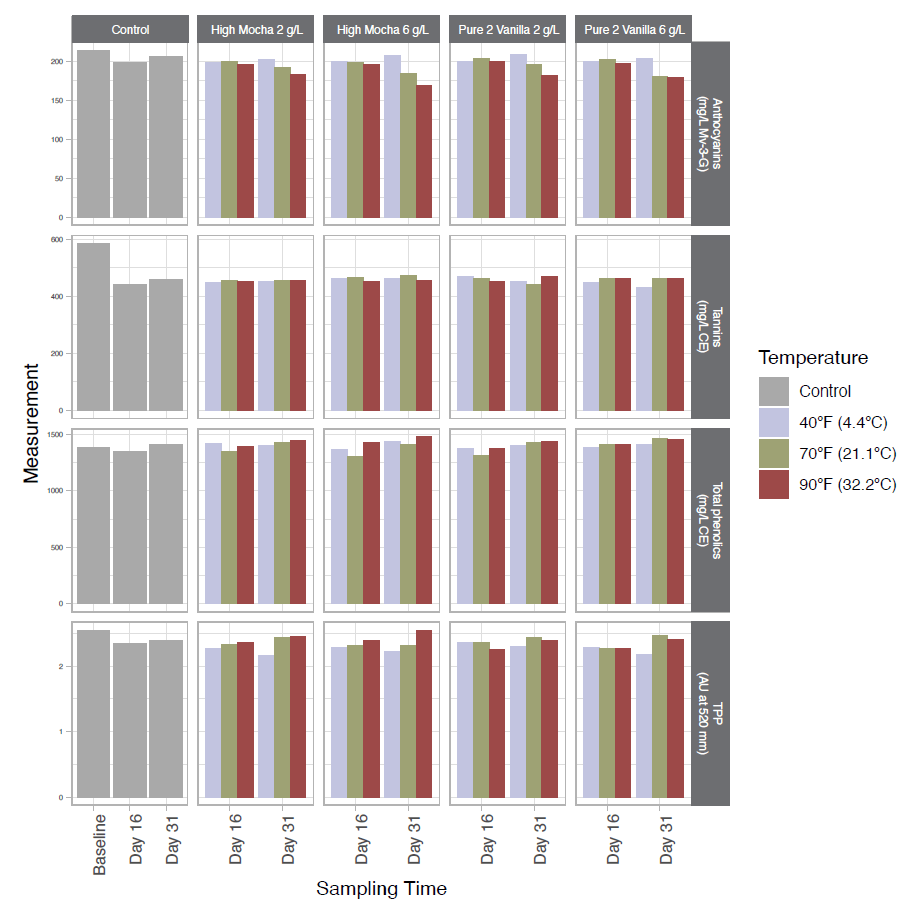
Figure 3. Changes in phenolic chemistry between the baseline and 31 days of contact time.
Color
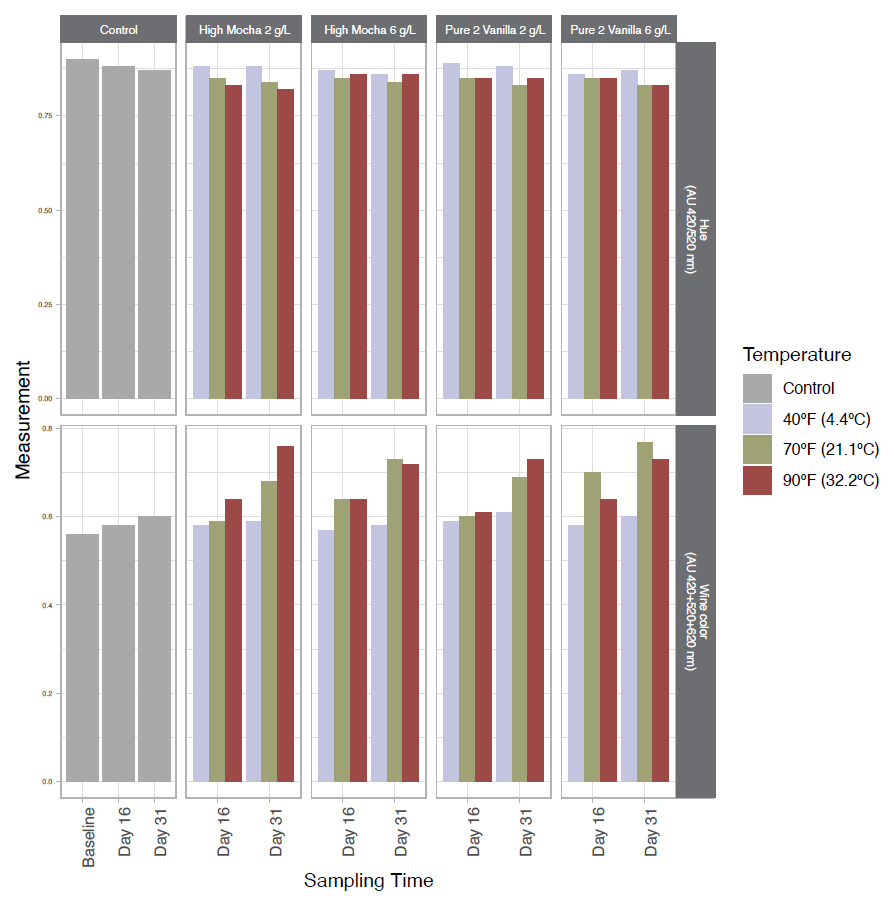
Figure 4. Evolution of wine color and hue throughout the experiment.
Temperature had a clear effect on wine color, with higher temperatures (70°F and 90°F) producing increased color intensity. This effect can be primarily attributed to the loss of free SO₂ at elevated temperatures, which enhances visible color rather than reflecting true phenolic changes. Despite these shifts in intensity, the hue remained remarkably stable across all treatments, indicating that temperature and dosage had minimal influence on overall color balance.
Oak Aromatics Chemistry
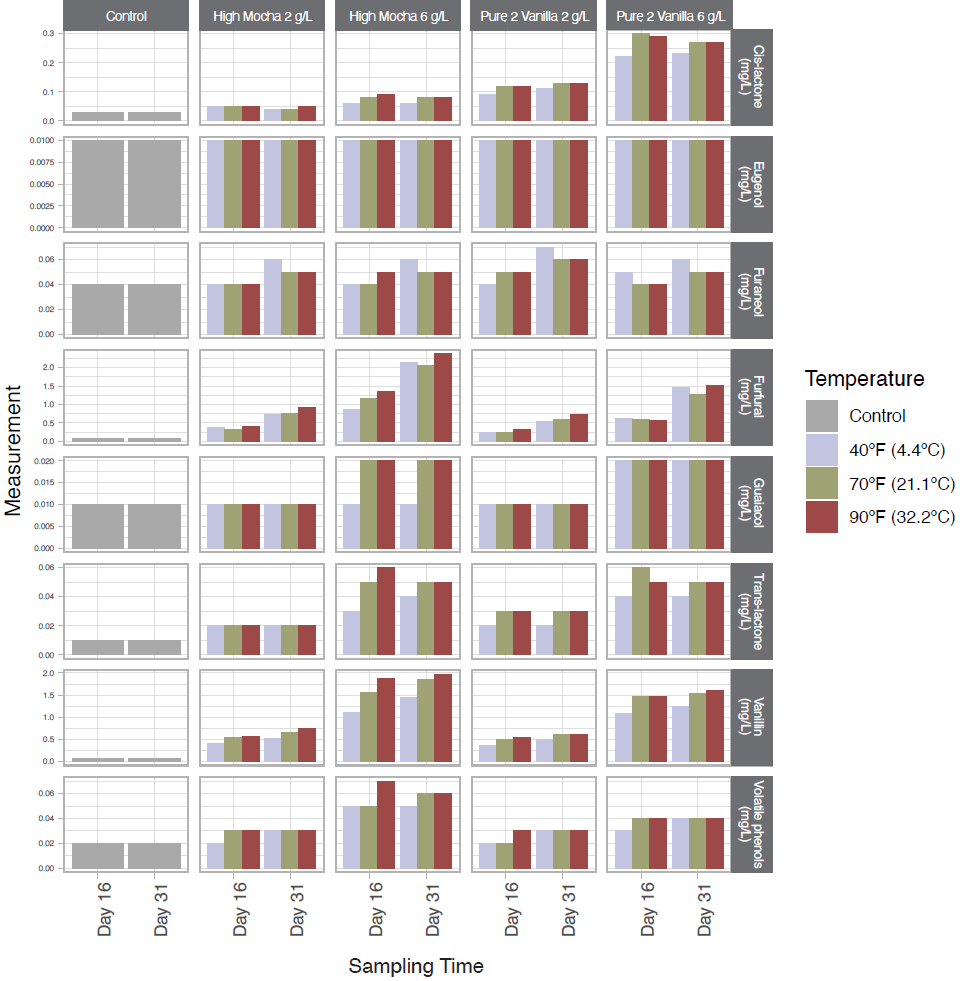
Figure 5. Concentration profiles of eight selected oak-derived volatiles at 16 and 31 days across the applied temperature conditions.
Product Contrast
The two oak chip profiles exhibited clearly differentiated extraction patterns. Contact with High Mocha oak chips produced comparatively higher levels of furfural and vanillin, resulting in a more toasted-vanilla aromatic profile, whereas contact with Pure 2 Vanilla emphasized lactone-driven sweetness. Because oak lactones are typically more abundant in American oak (Quercus alba)—the species used to produce Pure 2 Vanilla—its stronger lactone expression and rapid equilibrium are consistent with expectations. Furthermore, it was noteworthy the chemical analysis remained consistent with the expected sensory profile for each oak product, which are both designed to offer specific and repeatable sensory results.
Extraction of Volatiles
The control wine behaved as expected: in the absence of oak-chip addition,
oak-derived compound levels remained stable throughout the contact period. Concerning the experimental treatments involving oak addition, the results showed that most compounds reached their maximum extraction after 16 days of wine–chip contact, regardless of dosage or temperature. Vanillin exhibited only a minor increase between days 16 and 31; extraction continued but at a much slower rate. By day 16, vanillin concentrations were already above its sensory threshold in red wine
(0.32 mg/L), indicating that vanilla notes can be enhanced within a short timeframe. Guaiacols are known to be extracted predominantly during the early stages of the process. Structurally, vanillin and guaiacol share similar basic chemistry functional groups, explaining their comparable extraction kinetics. As illustrated in Figure 6, vanillin includes an aldehyde group; removal of the double-bonded oxygen and hydrogen yields the guaiacol structure.
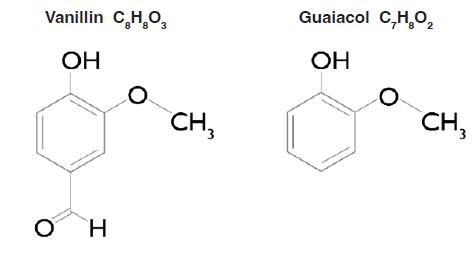
Figure 6. Comparison of molecular structures for vanillin and guaiacol.
In contrast, furfural and furaneol continued to increase beyond 16 days, indicating that longer contact times favor the extraction of these molecules. Furanic compounds may exhibit distinct extraction dynamics compared to other oak-derived volatiles, likely related to their formation during toasting and their distribution within the wood structure. From a practical standpoint, when a pronounced vanilla note is desired, limiting contact to roughly 16 days can help prevent masking by furanic compounds; conversely, extended contact can be used strategically to develop greater toasted complexity.
Throughout the study, as illustrated in Figure 5, the dosage consistently proved to be the primary factor influencing extraction, while temperature exhibited a lesser and compound-specific effect. To further quantify these relationships, a Partial Least Squares (PLS) model was applied to evaluate the individual contributions of contact time, temperature and dosage.
Ranking of Experimental Parameters
PLS (Partial Least Squares regression) is a multivariate statistical method used to model the relationship between multiple input variables (e.g., temperature, dosage rate, contact time) and multiple response variables (e.g., concentrations of volatile compounds). In this study, PLS helped identify which experimental factors had the greatest impact on compound extraction. The Variable Importance in the Direction (VID) values, derived from the PLS model, quantifies the relative influence of each factor.
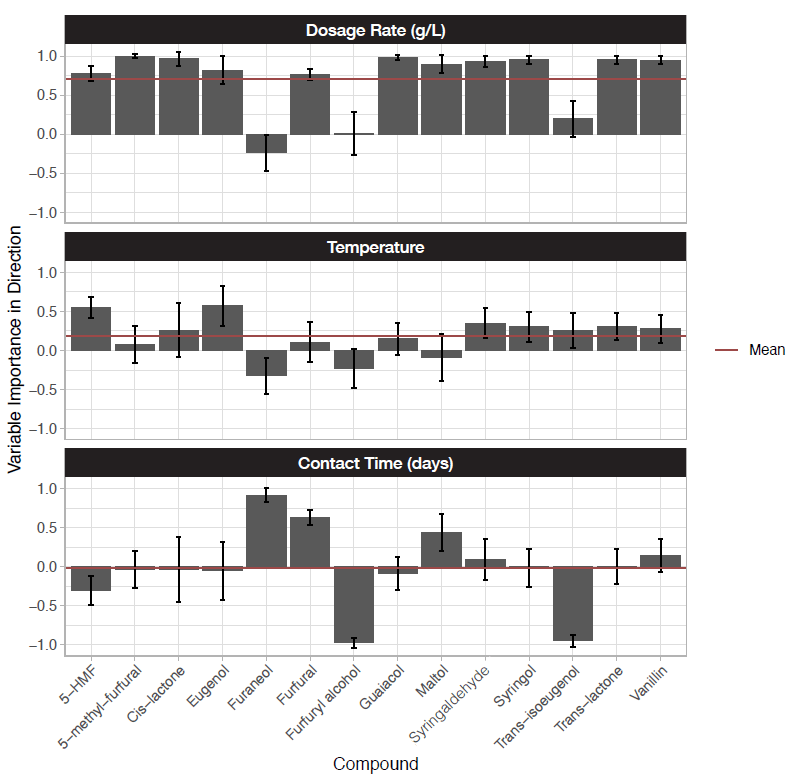
Figure 7. Mean Variable Importance in the Direction (VID) across 14 compounds, by experimental factors.
Analysis of the VID values calculated for 14 oak-derived volatile compounds provided a clear ranking of the influence of the three experimental parameters: temperature, dosage rate and contact time, as shown in Figure 7. Dosage rate was the most influential factor, with VID values above 0.8 for most compounds, confirming its central role in modulating concentration levels. Temperature showed a moderate but meaningful influence, ranking second, and should not be overlooked when optimizing the rapid extraction of desired oak-related compounds. Finally, although contact time contributes to extraction, its effect was more limited under the tested conditions, consistent with the kinetics of certain compounds that plateau shortly after initial exposure.
This objective ranking highlighted the key levers for optimizing oak extraction, underscoring the primary role of dosage while reinforcing that thermal effects, often underestimated, deserve closer attention.
Table 2. Variable Importance in the Direction (VID) values for each compound and experimental factor in High Mocha and Pure 2 Vanilla profiles.
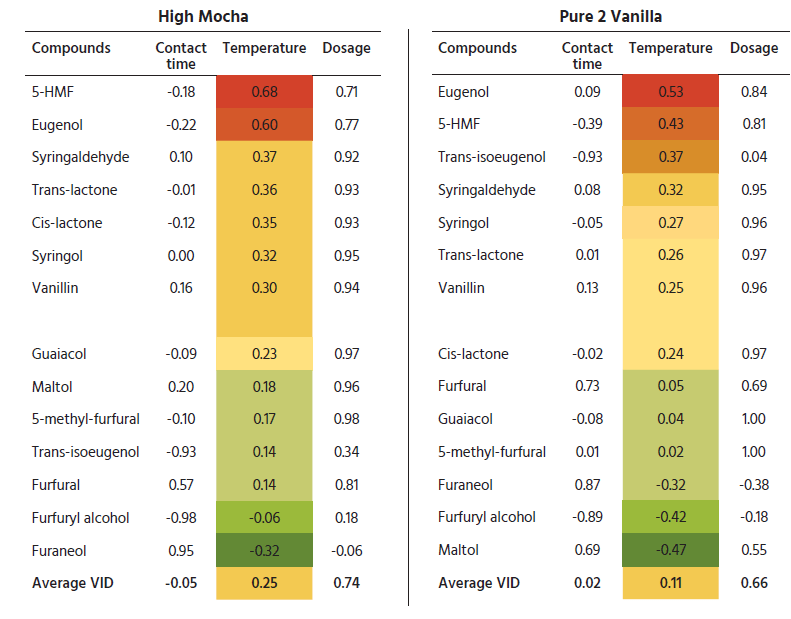
Color gradient: warm colors (yellow to red) indicate positive VID values while green shades reflect negative values. Increased color intensity represents increased magnitude for positive or negative VID values.
The analysis of VID values in Table 2 revealed notable differences in how each experimental factor influences the extraction of oak-derived compounds in the two oak chip profiles studied: High Mocha and Pure 2 Vanilla.
For High Mocha, the dosage was the most influential parameter overall, with a strong average VID (0.74), followed by temperature (0.25). The contact time showed a slightly negative influence (–0.05), suggesting that extending extraction duration (after 31 days) does not significantly improve compound release in this profile.
For Pure 2 Vanilla, the pattern was similar but less marked: dosage remained the main driver (VID = 0.66), while temperature had a moderate role (VID = 0.11). Interestingly, contact time showed a small positive average VID (0.02), suggesting a slightly more progressive extraction profile compared to High Mocha.
These findings confirm that oak chip dosage was the primary driver of compound extraction, while temperature, though often underestimated, plays a non-negligible and variable role depending on the product.
The analysis of VID values by compound revealed varying levels of sensitivity to tank temperature across chemical families, reflecting its role in modulating volatile compound extraction. Compounds naturally present in oak, such as eugenol and both cis- and trans-lactones, exhibited the highest sensitivity to temperature, as indicated by consistently elevated VID values in both product matrices.
Lignin-derived compounds—namely vanillin and guaiacol—showed a moderate influence of temperature, with VID values around 0.2 to 0.3.
Among hemicellulose degradation products, 5-hydroxymethylfurfural (5-HMF) showed relatively high VID values (above 0.4), particularly in the Pure 2 Vanilla matrix, suggesting a significant contribution of temperature to the extraction of
this volatile.
In contrast, furaneol, maltol and furfuryl alcohol showed negative or very low VID values for temperature—most notably in the Pure 2 Vanilla set—indicating an inverse or negligible association with temperature under the tested conditions.
CONCLUSIONS
This study evaluated the impact of storage temperature (40°F/4.4°C, 70°F/21.1°C, and 90°F/32.2°C), dosage (2 vs. 6 g/L), and contact time (16 vs. 31 days) on the rapid extraction of oak-derived compounds from French and American oak chips into a Merlot matrix. Among the 28 volatiles measured, dosage was the primary driver of extraction, whereas temperature showed a secondary, compound-dependent influence, and extending contact time beyond ~16 days produced comparatively limited gains for most compounds.
Extraction kinetics were compound-specific: vanillin and lactones reached perceptive levels rapidly (with vanillin surpassing its sensory threshold in red wine by day 16), while furans (e.g., furfural, furaneol) continued to increase beyond 16 days—consistent with their deeper localization in oak and slower diffusion into wine.
The product contrast was also clear: High Mocha expressed a more toasted/vanillin-forward profile, while Pure 2 Vanilla emphasized lactone-driven sweetness, in line with species effects (Quercus alba being richer in lactones) [4].
The increase of tank temperature to 90°F (32.2 °C) appeared to favor furan extraction to some extent. However, this study was not intended to promote deliberate heating of wines; rather, the goal was to better understand how extraction patterns shift under different temperature regimes that may naturally occur in cellar storage conditions. Considering the risks associated with prolonged high wine temperatures (e.g., oxidation, anthocyanin degradation, accelerated SO₂ consumption, microbial spoilage), such practices would not be advisable. Instead, these results emphasize the importance of anticipating how natural cellar temperature fluctuations can shape extraction kinetics and aromatic balance.
ACKNOWLEDGEMENTS
The authors gratefully acknowledge the California Polytechnic State University Research Winery (San Luis Obispo) for providing facilities, analysis and support throughout the experiment. We also thank the ISCO Laboratory analytical team for GC–MS measurements of oak volatiles.
REFERENCES
[1] T. Tarko, F. Krankowski, A. Duda-Chodak, The impact of compounds extracted from wood on the quality of alcoholic beverages, Molecules 28(2) (2023) 620.[2] J.J. Rodríguez-Bencomo, M. Ortega-Heras, S. Pérez-Magariño, C. González-Huerta, Volatile Compounds of Red Wines Macerated with Spanish, American, and French Oak Chips, Journal of Agricultural and Food Chemistry 57(14) (2009) 6383-6391.
[3] Oak Solutions Group–E. Larmie, D. Llodrá, J.L. Smith, Forward Thinking Methods: A Guide to Oak Alternatives (2011) 79-80.
[4] K. Chira, P.-L. Teissedre, Extraction of oak volatiles and ellagitannins compounds and sensory profile of wine aged with French winewoods subjected to different toasting methods: Behaviour during storage, Food chemistry 140(1-2) (2013) 168-177.